
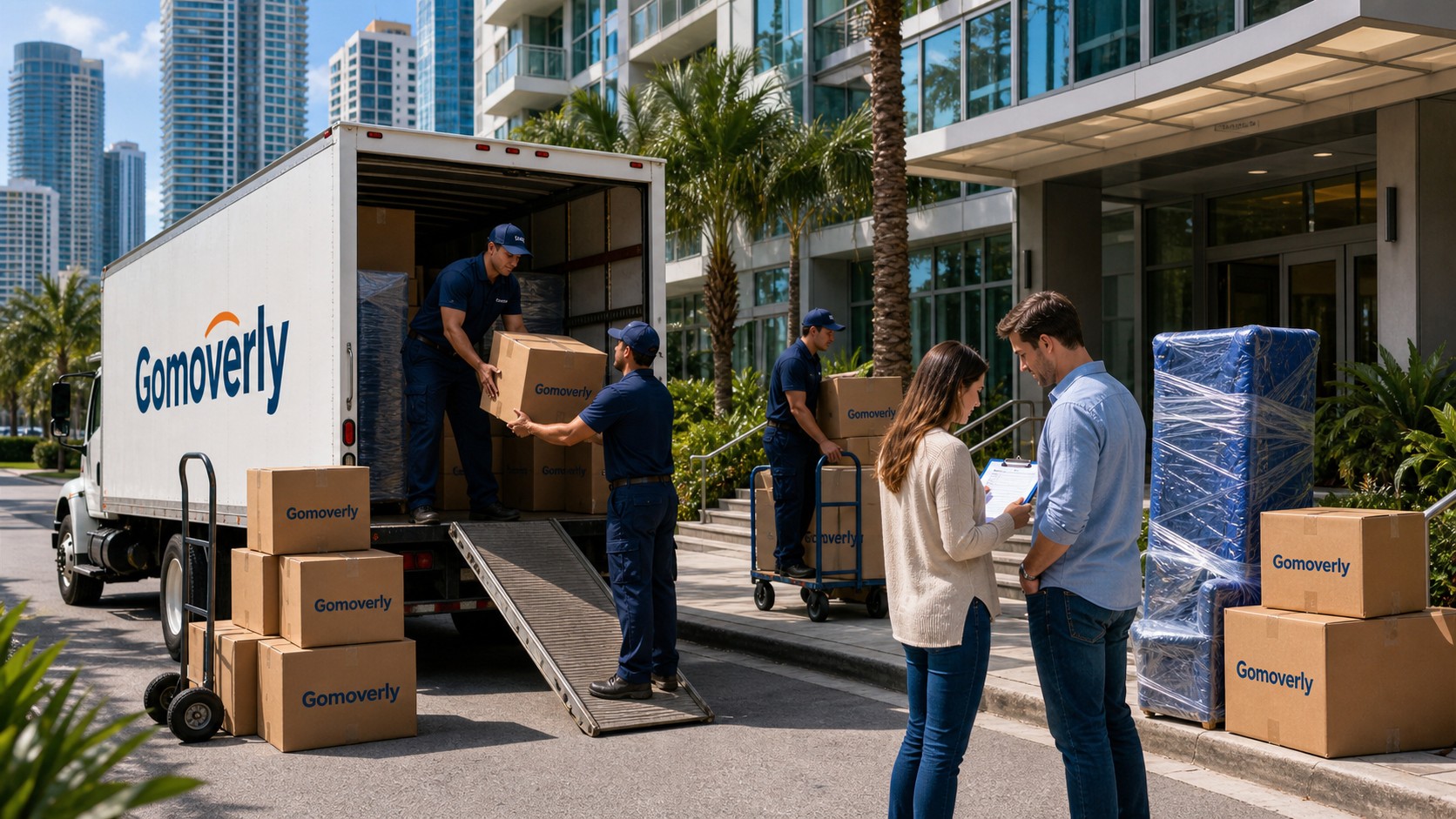
ZIP code 33101 covers part of downtown Miami, an area of high-rises, condo towers, and tight street access. A local move into 33101 typically runs a few hundred dollars for a studio or small apartment up to a few thousand for a larger home, with the building’s elevator and parking rules often mattering more than the distance. Long-distance moves into the area cost considerably more and need earlier planning.
Because so much of 33101 is vertical living, the move itself is shaped by the building: reserved freight elevators, certificate-of-insurance requirements, loading zones, and time windows. Get those right and your move is smooth. Miss them and you can lose a whole booking. Here’s what to plan for.
What it costs to move to 33101
Treat any numbers here as ballpark ranges, not quotes. Your real price depends on home size, how much you own, the floor you’re moving to, elevator access, and the season. As a rough guide for a local move within the Miami area:
- Studio or small one-bedroom: often a few hundred dollars, sometimes more if there’s a long carry or no freight elevator.
- Two-bedroom apartment or condo: commonly in the high hundreds to low thousands.
- Three-bedroom home: typically a few thousand dollars locally.
- Long-distance move into 33101: usually several thousand dollars, driven by distance and total weight.
Local movers in Miami usually charge by the hour with a crew minimum, plus a truck or travel fee. Long-distance moves are priced on weight and mileage. The biggest local cost swings in 33101 come from building access: a high floor with a slow or shared elevator turns a three-hour job into a five-hour one, and you pay for that time.
Costs that catch people off guard downtown
- Long carry fees when the truck can’t park close to the entrance.
- Elevator wait time if the freight elevator is shared and you didn’t reserve it.
- Stair carries in older buildings without freight access.
- Parking permits or loading-zone fees for the moving truck.
- COI handling if the building requires the mover to file insurance paperwork.
Building rules you have to handle first
This is the part that trips up newcomers. Most condo and apartment towers in downtown Miami have a move-in process you must arrange with building management before the day, sometimes a week or more ahead.
- Reserve the freight elevator. Many buildings only allow moves during set hours (often weekday daytime) and require you to book the elevator. Weekend slots fill fast.
- Get a Certificate of Insurance (COI). Buildings routinely require your mover to provide a COI naming the building as additional insured. A licensed mover handles this; an unlicensed one usually can’t, which is one more reason to use a real company.
- Confirm the move-in window. Some buildings limit moves to specific days or hours and charge a fee or deposit.
- Ask about loading zones. Find out where the truck can legally stage and for how long.
Call your building or HOA as soon as your date is set. A booked crew can’t do much if they show up and the elevator is locked or the COI was never filed.
Parking and street access in downtown Miami
Downtown streets are narrow, busy, and tightly enforced. A big moving truck can’t just idle wherever it likes. Plan for one of these:
- Building loading dock or designated loading zone if your building has one. This is the easiest option.
- A temporary parking or loading permit from the City of Miami if you need to reserve curb space. Check the city’s current process and apply early.
- Early-morning timing to beat traffic and grab open space before the area fills up.
If the truck has to park far from the door, expect a long-carry charge. Sorting out parking ahead of time is often the single best thing you can do to keep the bill down.
The best time to move into 33101
Miami’s weather and tourism patterns shape the ideal timing.
- Season: Summer is hot and humid, with afternoon thunderstorms and the start of hurricane season. If you can, move in the morning to dodge both the heat and the storms. The drier winter months are more comfortable but overlap with the busy tourist season downtown.
- Day and time: Mid-week, mid-month, and early morning are cheapest and least congested. Many buildings restrict moves to weekdays anyway.
- Hurricane awareness: Atlantic hurricane season runs roughly June through November. It rarely forces a cancellation, but keep an eye on forecasts and have a backup date in mind if you’re moving in peak storm months.
Local tips that make a downtown move easier
- Measure your big furniture and the elevator. Downtown elevators and unit doorways can be small. Know whether the couch fits before moving day.
- Pack an essentials bag for the heat. Water, a fan, deodorant, and a change of clothes. A summer move in Miami is sweaty work.
- Protect against humidity in storage. If anything goes into storage, use a climate-controlled unit. Florida humidity is rough on electronics, wood, and paper.
- Confirm everything in writing. The elevator booking, the COI, the parking plan, and the mover’s estimate.
- Tip for stairs and heat. If your crew hauls everything up many floors in August humidity, a tip is well earned.
Choosing a mover for a 33101 move
You want a company that knows downtown Miami buildings and can produce a COI without drama. Look for:
- Proper licensing (state registration for local moves, FMCSA registration for interstate).
- Experience with high-rise and condo moves, including freight-elevator coordination.
- The ability to provide a Certificate of Insurance for your building.
- A written, itemized estimate so building-access fees don’t surprise you.
- Recent reviews from other downtown moves, ideally.
Get at least three written quotes and tell each company your floor, elevator situation, and building requirements so the estimate is realistic. If you’d rather compare a few vetted options at once, you can request a free quote from Moverly and see estimates side by side.
FAQ
How much does it cost to move into a downtown Miami high-rise?
For a local move, a small apartment often runs a few hundred dollars and a larger home can reach a few thousand, with building access being the biggest variable. A high floor, a shared elevator, or a long carry from the truck all add hours and cost. Get a written estimate that accounts for your specific building.
Do I need a Certificate of Insurance to move into a 33101 building?
Most condo and apartment towers downtown require one. The COI names the building as additional insured and protects the property during your move. A licensed mover provides it routinely. Ask your building management for their exact requirements as soon as your date is set.
When is the cheapest time to move in Miami?
Mid-week, mid-month, and early morning are typically the cheapest and least congested. Many downtown buildings only allow moves on weekdays, which works in your favor since weekdays are also less expensive than weekend slots.
Should I worry about hurricane season when moving to Miami?
It’s worth being aware of. Atlantic hurricane season runs from about June to November. Most moves go ahead without issue, but if you’re moving during peak storm months, watch the forecast and keep a backup date open just in case.