
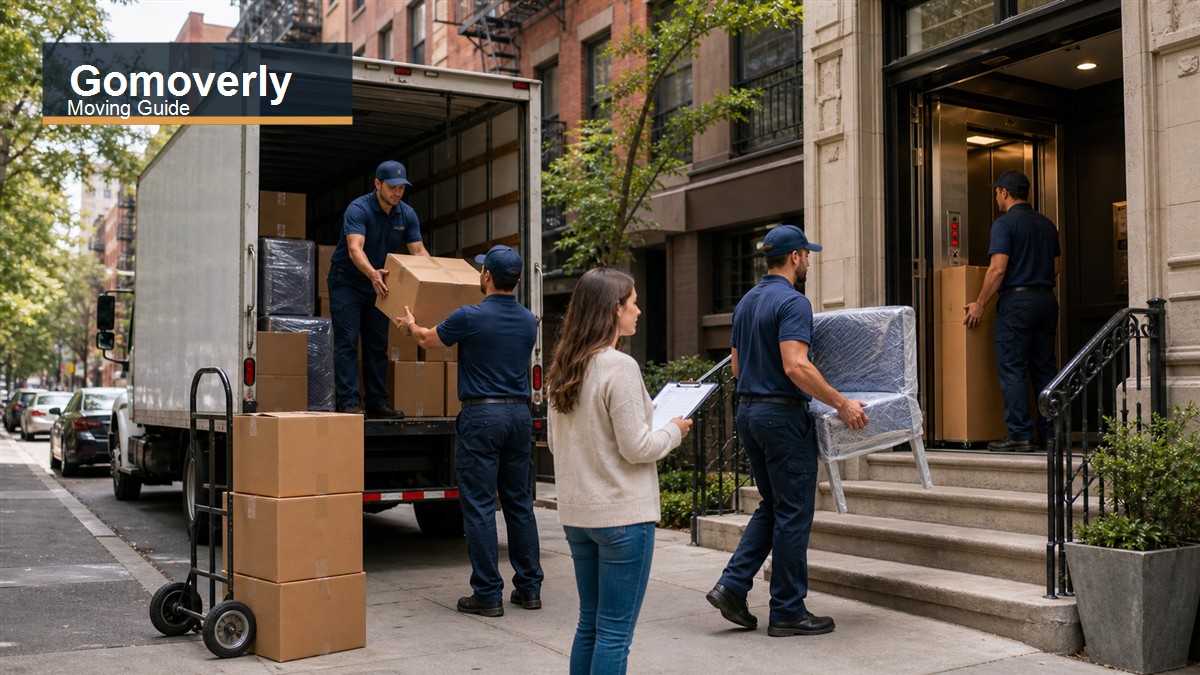
Moving an apartment in New York City lives and dies on three things: stairs, elevators, and parking. A crew that’s great in the suburbs can fall apart at a fifth-floor walk-up or a doorman building that needs a certificate of insurance and a reserved freight elevator. The best NYC apartment movers handle these realities every day, and that experience is worth more than the lowest hourly rate.
If you’re moving into, out of, or within the city, here’s how each of those three factors shapes your day and your bill, plus how to choose a crew that won’t get stuck in the lobby.
Stairs and walk-ups
Plenty of NYC apartments are walk-ups, sometimes four or five flights, with narrow, turning staircases that were never built for a queen mattress. Stairs are the single biggest variable in walk-up moves.
How stairs affect the job
- Movers usually factor the number of flights into the price, either as a flat stair fee or by the extra time on an hourly job.
- Be honest and specific when you get a quote: “third floor walk-up, two flights from the street door” tells the mover what they’re walking into.
- Some oversized items simply won’t fit a tight stairwell and may need to be hoisted through a window or disassembled. Mention any big or awkward pieces upfront.
Surprising a crew with stairs on moving day either slows everything to a crawl or adds charges you didn’t plan for. The fix is simple: describe the access accurately when you book.
Elevators and the COI requirement
Elevator buildings sound easier, and often are, but they come with their own rules, especially in managed and luxury properties.
Freight elevators and timed slots
Many buildings require movers to use a freight elevator rather than the passenger one, and they limit moves to set hours, commonly weekday business hours. You’ll often need to reserve the freight elevator in advance, sometimes with a refundable deposit. Slots fill fast at month-end when leases turn over, so book early.
The certificate of insurance
This trips up first-time NYC movers more than anything else. Most managed buildings will not let movers in without a certificate of insurance (COI) on file, often a day or two ahead.
- A COI proves the moving company carries liability coverage, protecting the building from damage to lobbies, elevators, and hallways.
- Ask your building manager for the exact requirements early. Buildings often specify minimum coverage and require to be named as an additional insured.
- Send those requirements to your mover the moment you book. A real NYC mover issues COIs routinely and for free.
- Confirm the building has the COI and has approved it before moving day, not the morning of.
If a mover hesitates over a standard COI or wants a big fee for one, you’ve found the wrong company.
Parking and the truck reality
New York doesn’t offer a simple residential moving-truck permit the way some cities do. There’s rarely a guaranteed spot for a 26-foot truck on a city block. Experienced movers manage this by finding the nearest legal loading or standing zone, working quickly, and accepting that a parking ticket can be part of the cost of doing the job here.
What this means for you
- The truck may park farther from your door than you’d like, creating a long carry. On bigger jobs, long carries can add to the cost.
- If your building has a loading dock (common in newer high-rises), ask whether the truck must use it and whether there are height or time limits.
- Don’t promise a mover a parking spot you can’t deliver. They plan around the street as it actually is.
- Narrow streets, bus lanes, and bike lanes can all affect where a truck can legally stop. A local crew knows the workarounds.
Booking the right NYC apartment movers
Choose for competence with city logistics, not just price.
- Confirm they work NYC apartments daily. Ask how often they handle walk-ups, freight elevators, and COIs in your borough.
- Check licensing. For moves within the state, New York licenses household movers through the NY DOT, so ask for the number. For a move across a state line (to New Jersey, say), they need a federal USDOT number you can verify with the FMCSA.
- Get a survey for anything past a studio. An in-home or video walkthrough lets the mover price stairs, elevators, and access accurately. A phone quote with no questions is a guess.
- Ask about COIs upfront. Quick, free, routine is the right answer.
- Read recent reviews for damage and billing patterns, not just stars.
What it costs and why
NYC apartment moves run higher than most of the country because of the labor that stairs, elevators, and tight access demand. Exact pricing depends on apartment size, the floor, whether there’s an elevator, the date, and the borough, so be skeptical of any single number.
- Local moves are usually billed hourly with a multi-person crew and a truck. Studios and one-bedrooms are at the lower end; bigger apartments with stairs climb fast.
- Month-end and summer are the priciest and hardest to book. Mid-month, mid-week is cheaper and easier.
- Common add-ons include stair fees, long carries, packing labor and supplies, and bulky-item charges. Ask for these to be listed on the estimate.
To compare a few licensed NYC crews without calling each one, you can use Moverly to request free quotes for your apartment.
A smooth NYC apartment move, step by step
- 4 to 6 weeks out: book the mover and lock the date, especially for month-end or summer.
- 2 to 3 weeks out: get the building’s insurance requirements at both ends and reserve any freight elevators.
- 1 week out: confirm COIs are submitted and approved by both buildings. Finish most packing.
- Day before: confirm the crew’s arrival time and elevator slots. Set aside an essentials bag and important documents to keep with you.
- Moving day: have a contact at each building, keep elevator reservations on hand, and tip a crew that works hard in tough conditions.
FAQ
Do all NYC buildings require a certificate of insurance?
Not all, but most managed and doorman buildings do, and many luxury high-rises are strict about it. Ask your building manager early for the exact requirements and pass them to your mover, who should issue the COI quickly and at no charge.
How do movers handle parking in NYC without a permit?
New York doesn’t offer a simple residential moving-truck permit, so experienced crews use the nearest legal loading or standing zone and work fast. Expect the truck to park as close as it legally can, which sometimes means a longer carry to your door.
Are walk-up moves really more expensive?
Yes, because stairs add labor and time. Movers price flights into the job as a stair fee or extra hours. Always state the exact number of flights when you get a quote so the estimate is accurate and you avoid surprise charges on the day.
How early should I book movers for a NYC apartment?
Four to six weeks is a good target, more for month-end or summer moves. Both good crews and freight elevator slots book up fast around lease-turnover dates, so locking in your date early saves money and stress.