
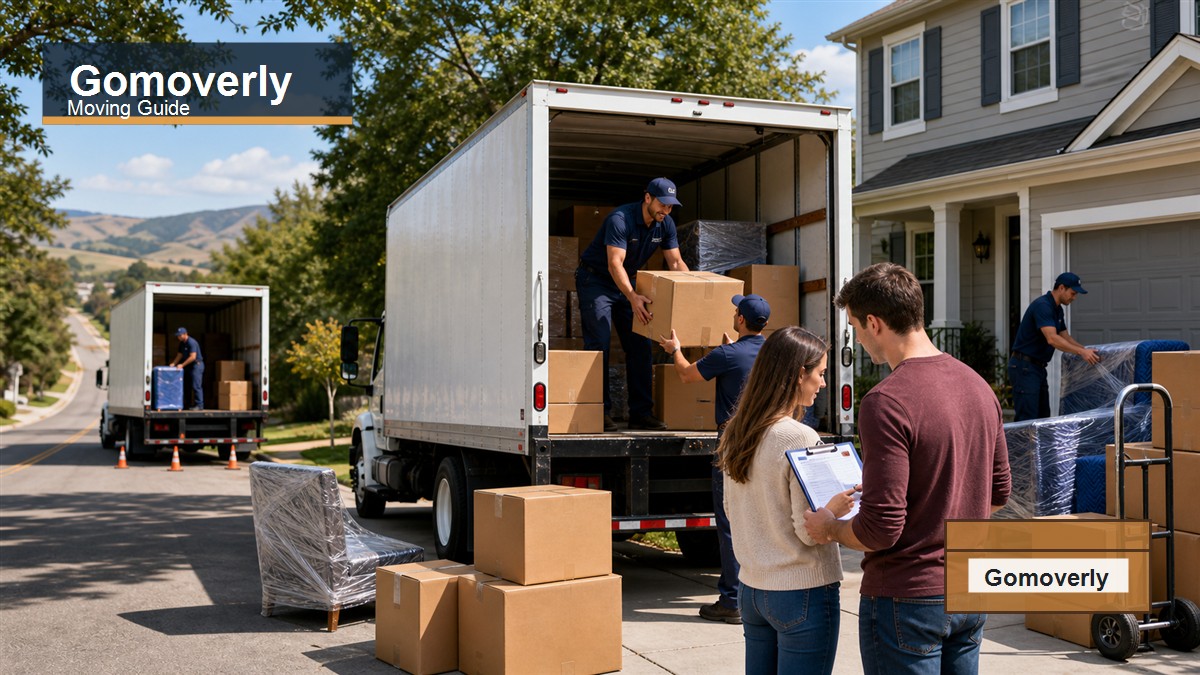
The short version: local movers usually charge by the hour and stay within roughly 50 to 100 miles, while long-distance movers price your move by the weight of your shipment and the distance it travels, often across state lines. That single difference in how they bill you changes almost everything else, from the paperwork you sign to how much insurance protection you get.
If you’re trying to figure out which kind of mover you actually need, the answer comes down to distance and whether you’re crossing a state border. Let’s walk through what separates the two so you can read a quote and know what you’re looking at.
The basic definition of each
A local move is short. Most companies and most state rules treat anything under about 50 miles as local, though some stretch that to 100 miles. These moves almost always happen in a single day, and the crew loads, drives, and unloads without your stuff ever leaving the truck overnight.
A long-distance move covers everything past that line. The industry breaks it down a bit further:
- Intrastate long-distance: a long move that still stays inside one state, like El Paso to Houston. These are regulated by the state, not the federal government.
- Interstate: any move that crosses a state line, even by a mile. These fall under federal rules and the Federal Motor Carrier Safety Administration (FMCSA).
That last category matters because interstate movers have to be registered with a federal license, which gives you a way to check them out before you hand over your belongings.
How they price the move
This is the biggest practical difference, and it’s worth understanding before you read any estimate.
Local: hourly rates
Local movers typically bill by the hour, with a crew of two or three plus a truck. Rates swing a lot by city, but as a rough range you might see somewhere around $100 to $200 per hour for a two-person crew, more for three or four movers. Many companies have a two- or three-hour minimum. You may also pay a travel fee that covers the time it takes the truck to get to you and back to the yard.
The upside is simplicity. The downside is that the meter runs, so anything that slows the crew down (long carries, stairs, a packing job that wasn’t finished) costs you more.
Long-distance: weight and distance
Long-distance movers usually base the price on how much your shipment weighs and how far it goes. Some interstate carriers price by cubic feet instead, but reputable ones lean on weight because it’s harder to fudge. The truck gets weighed empty and then again loaded, and the difference is your shipment weight.
On top of the line haul (weight times distance), you’ll often see add-on charges for things like:
- Long carries when the truck can’t park close to your door
- Stair or elevator fees
- Shuttle service when a full-size truck can’t reach the home
- Packing materials and labor, if you don’t pack yourself
Because of all these variables, a long-distance estimate should be more detailed than a local one. If it isn’t, that’s a flag.
Binding vs non-binding estimates
For long-distance interstate moves, the type of estimate you get is a big deal, and federal rules require movers to spell it out.
- Non-binding estimate: a good-faith guess. The final bill can change based on actual weight and services, though there are limits on how much more they can collect at delivery.
- Binding estimate: a fixed price for the services listed, no matter the actual weight.
- Binding not-to-exceed: the best of both. If the real weight is lower, you pay less; if it’s higher, you don’t pay more than quoted.
Local hourly moves don’t usually work this way because the price is tied to time, not weight. For any interstate move, ask which kind of estimate you’re getting and get it in writing.
Licensing and what protects you
Interstate movers must register with the FMCSA and carry a USDOT number. You can look that number up on the FMCSA’s site to confirm the company is active, see its registered name, and check whether complaints are on file. This is one of the simplest ways to avoid a rogue operator.
Local and intrastate movers are regulated by the state instead. Rules vary a lot. Some states require movers to hold a state license and carry specific insurance; others barely regulate them at all. Before you book a local company, check whether your state has a moving regulator (often the public utilities commission or department of transportation) and confirm the mover is registered there.
Liability coverage
Both types of mover owe you some basic coverage, but it’s thin. The default for interstate moves, called released value protection, pays only about 60 cents per pound per item. So a 10-pound electronic device that gets crushed nets you about six dollars unless you buy full value protection. Ask about your options and consider whether your homeowner’s or renter’s policy fills any gaps.
Timing and logistics differ a lot
A local move is usually a one-day event. You can sometimes book it on short notice, and the crew that loads your truck is the same crew that unloads it.
Long-distance is a different animal:
- Delivery windows, not exact times. Your shipment may share a truck with other households, so you’ll get a delivery spread of several days rather than a precise hour. Ask for the window in writing.
- Longer lead time. Book interstate moves weeks ahead, especially in summer when demand peaks.
- Inventory matters more. Because pricing rides on weight and your goods travel far, a careful inventory protects you if something goes missing or gets damaged.
Which one do you actually need?
Use distance and state lines as your guide:
- Staying within roughly 50 miles and not crossing a state border? You want a local, hourly mover.
- Going farther but staying inside your state? That’s an intrastate long-distance move, regulated by your state.
- Crossing any state line? That’s interstate, and you need an FMCSA-registered mover.
One gray area trips people up: a short move that crosses a state border still counts as interstate. Moving from one side of a metro area to the other across a state line (think Kansas City or parts of the New York metro) puts you under federal rules even if it’s only 15 miles. Don’t assume a short trip means local rules apply.
Reading and comparing quotes
When you collect estimates, line them up the same way:
- For local moves, compare hourly rate, crew size, minimum hours, and travel fee. A cheap hourly rate with a tiny crew can cost more than a higher rate with an efficient team.
- For long-distance moves, compare the estimate type (binding vs non-binding), the weight or cubic-foot basis, and every listed accessorial charge.
- Be skeptical of any mover that quotes a firm long-distance price without asking detailed questions about your inventory and access. A real estimate needs that information.
If you’d rather not chase down several companies one at a time, Moverly can connect you with licensed local and long-distance movers and pull together free quotes you can actually compare side by side.
FAQ
At what distance does a move stop being local?
Most movers and state rules treat moves under about 50 miles as local, though some go up to 100 miles. The cleaner test is whether you cross a state line: any interstate move is long-distance and federally regulated, no matter how short.
Why is a long-distance move priced by weight instead of hours?
Over long distances, time isn’t a fair measure because so much of it is driving. Weight reflects how much truck space and fuel your shipment actually uses, which is why reputable interstate movers weigh the truck empty and full to set the price.
Are local movers licensed the same way as long-distance movers?
No. Interstate movers register with the FMCSA and carry a USDOT number you can verify. Local and intrastate movers fall under state rules, which vary widely. Always check your state’s moving regulator before booking a local crew.
Can I get full protection for my belongings on either type of move?
Yes, but you usually have to ask for it. The default coverage on interstate moves is minimal (around 60 cents per pound). Buying full value protection or confirming your home insurance covers the move is worth it for valuable items.